
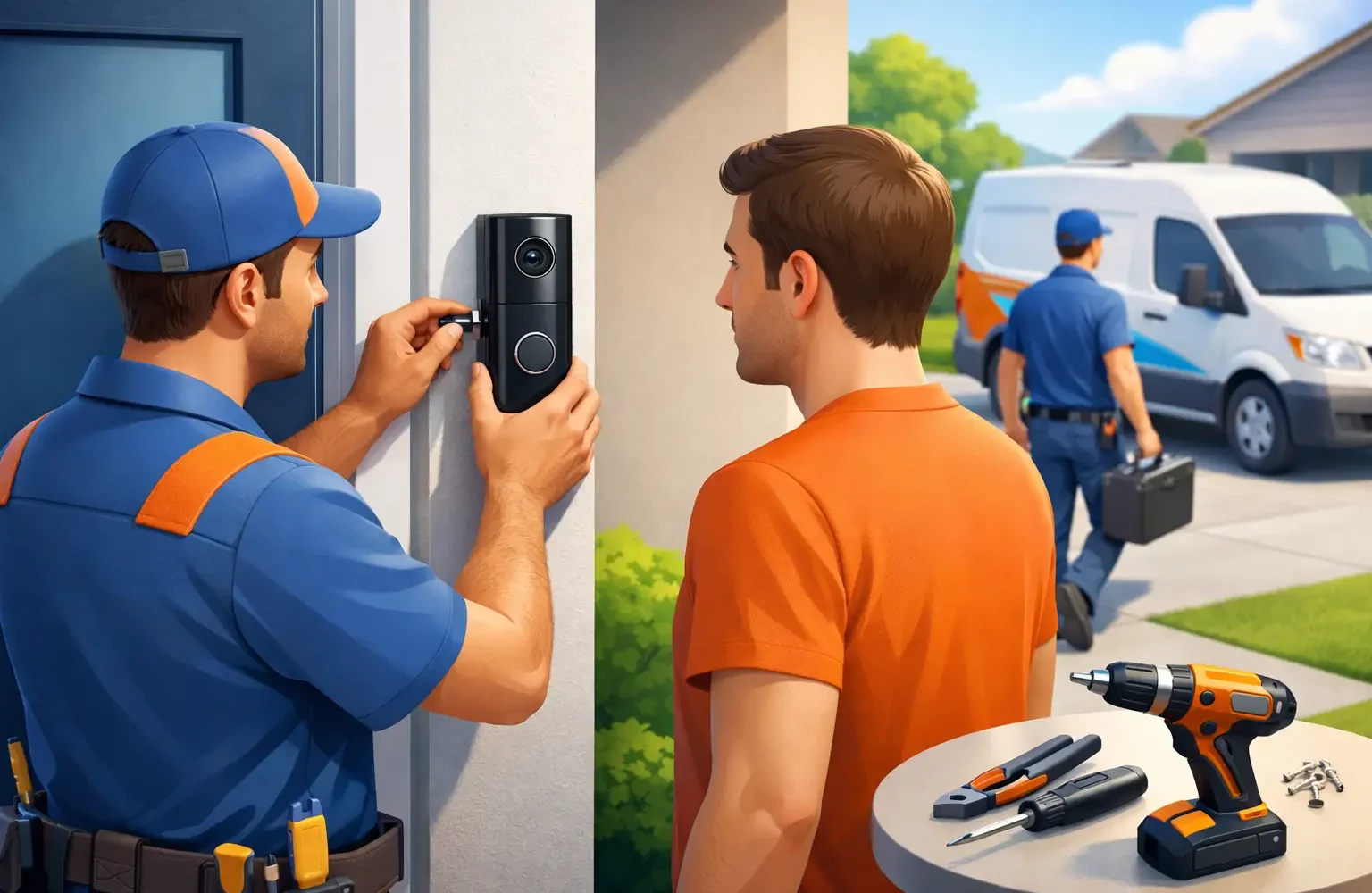
A lot of people ask who installs video doorbells only after they have bought one and opened the box. That is usually the point where the job stops looking simple. A battery model may seem straightforward, but once you start thinking about door position, signal strength, wiring, fixing into brick, and getting a neat finish, it makes sense to bring in the right person.
The short answer is that video doorbells are commonly installed by locksmiths who offer security upgrades, electricians, dedicated security installers, and in some cases competent handymen. The right choice depends on the type of doorbell, the condition of your entrance, and whether you want basic fitting or wider advice on home security.
Who installs video doorbells in practice?
If you are fitting a battery-powered unit to a standard front door with good Wi-Fi and a sensible mounting position, a general security professional or experienced handyman may be able to do the job well. If your door is awkward, your frame is uPVC or composite, the wall surface is uneven, or you want the device positioned to reduce tampering and improve coverage, a locksmith with door and hardware experience is often a very good fit.
Electricians are usually the right choice for hardwired video doorbells, especially where there is new wiring to run, an existing chime to integrate, or any uncertainty about the power supply. They can make sure the electrical side is safe and suitable. That matters because many installation problems are not really about the doorbell itself – they come from low voltage issues, poor cable routing, or incorrect transformers.
Security installers sit somewhere in the middle. If they already fit CCTV, alarms, and smart entry systems, they will often install video doorbells as part of a wider setup. That can be useful if you want your front entrance camera to work alongside other security measures rather than as a stand-alone gadget.
When a locksmith is the best choice
People do not always associate locksmiths with video doorbells, but it is a natural fit when the job is centred on the entrance itself. A good locksmith spends most of the day dealing with doors, frames, fixings, alignment issues, hardware, and security weak points. That practical experience matters more than many people realise.
Door type and mounting issues
A video doorbell has to be mounted in the right place to work properly. Too high and you miss faces. Too low and it is easy to interfere with. Too close to the edge of an opening door and the viewing angle becomes poor. On some properties, especially with uPVC or composite doors, there is a fine line between a secure, tidy fixing and a messy installation that looks like an afterthought.
A locksmith who regularly works on these doors can usually advise where the unit should go without creating avoidable damage or interfering with existing hardware. If your front door already has alignment problems, sticky locks, or loose furniture, it often makes sense to deal with all of it at the same time.
Security-led advice
Not every install is just about screwing a device to the wall. Sometimes the better question is whether the doorbell is being placed where it actually improves security. A camera that only films the top of a visitor’s head is not much use. Neither is a unit that can be removed easily from an exposed timber frame.
A locksmith tends to look at the whole entrance – lock standards, hinge side vulnerability, letterplate issues, glazing, and general access points. That wider view can be more useful than a basic fit-only service.
When you need an electrician instead
If the doorbell is mains-connected or wired into an existing bell system, use an electrician or a security installer with the right electrical competence. This is especially true in older properties where previous wiring may be unclear, modified, or poorly labelled.
Hardwired models can be a good option because you do not need to keep charging them, but they are less forgiving if the setup is not correct. An electrician can check whether the existing supply is suitable, whether a transformer is needed, and how to route cables cleanly. That is worth doing properly rather than trying to patch it together and hoping the app sorts it out.
For flats, converted buildings, and shared entrances, there may also be practical or legal limitations on what can be altered. In those cases, getting proper advice first saves time and avoids wasted cost.
Can a handyman install a video doorbell?
Sometimes, yes. For a simple battery unit on a straightforward wall, a reliable handyman may be perfectly capable. The issue is not whether someone can physically attach the device. The issue is whether they can position it well, avoid damaging the entrance, check the basics of connectivity, and spot anything that makes the setup a poor idea.
That is where the cheapest option can become the most expensive one. A badly placed doorbell may give weak motion alerts, poor image angles, or constant false triggers from passing traffic. If extra holes are drilled into the wrong surface, you are left with the repair even if the original fitting cost very little.
What a proper installation should include
A decent installer should do more than mount the unit and leave. They should look at the entrance layout, confirm the most suitable position, and explain any trade-offs before starting. On some homes the ideal camera angle clashes with the strongest Wi-Fi signal. On others the neatest mounting point is not the most secure one. You want someone who will talk that through plainly.
They should also check that the fixing method suits the surface, whether that is brick, render, timber, uPVC, or composite material. If it is a wired model, they should confirm the power arrangement is appropriate. If it is app-connected, they should at least make sure the unit powers up, links properly, and captures the area it is meant to cover.
A careful installer will also think about tamper risk, weather exposure, and visitor approach. Front doors in Scotland often deal with wind, rain, and awkward porches, so a doorbell that works well in a product video may need a different position in real life.
How to choose who installs video doorbells
Start with the type of unit you have bought. If it is battery-powered and the main concern is secure, tidy fitting on a difficult entrance, look for a locksmith or security professional with door hardware experience. If it is wired, begin with an electrician unless the installer clearly offers that work as part of a proper security service.
Then ask practical questions. Will they give you the price before travelling? Are they insured? Will the same person do the work from start to finish? Have they fitted these devices on similar properties before? Those points matter because people are not just buying a gadget fitting service. They are deciding who gets access to their home or building.
For many households and landlords, trust is as important as technical ability. A DBS-checked, insured tradesperson with a straightforward approach is often the safer choice than someone who is vague on pricing or turns up without much interest in the actual entrance security.
Common problems after a poor install
Most complaints come down to one of five things: weak signal, poor camera angle, unreliable motion detection, loose fixing, or damage to the mounting surface. None of those are unusual, and most are preventable.
Weak signal often means the unit has been placed too far from the router or on a wall that blocks reception. Poor angle is usually a positioning problem. Loose fixing comes from using the wrong screws or anchors for the substrate. Surface damage tends to happen when someone treats every door surround as if it were the same material.
This is why the question is not just who installs video doorbells, but who installs them well.
Is professional installation worth it?
If you are confident with tools and your setup is simple, you may manage it yourself. Plenty of people do. But if the entrance is awkward, the property is rented or managed, the unit is wired, or you want the job done cleanly first time, paying for installation is often worthwhile.
It is particularly sensible for landlords, holiday-let hosts, and HMO operators. In those settings, reliability matters more than saving a small amount upfront. You want the device fixed securely, working properly, and installed in a way that does not create future maintenance issues.
For property owners across central Scotland, firms such as Scotia Locksmiths often make sense when the job sits within wider door and entry security work rather than purely electrical work. The benefit is not just fitting the unit. It is having someone on site who can spot if the actual weak point is the lock, the frame, the alignment, or the entrance layout.
The best installer is the one whose skills match the real job in front of them. If your video doorbell is mainly a wiring project, use an electrician. If it is mainly an entrance security and fixing job, a locksmith or security installer may be the better call. A good result is not about picking the flashiest trade name. It is about choosing someone who will fit it properly, explain the options clearly, and leave you with a front door setup you can rely on.
Scotia Locksmiths are trusted, local, mobile locksmiths serving the following areas:
Perthshire & Kinross: Perth, Crieff, Blairgowrie, Kinross, Pitlochry,
Stirlingshire: Stirling, Dunblane, Callander, Killin, Lochearnhead
Dundee & Angus: Dundee, Broughty Ferry, Monifieth, Carnoustie
Fife: Dunfermline, Kirkcaldy, Glenrothes, St Andrews, Cupar, Leven, Rosyth
West Lothian and Falkirk: Falkirk, Grangemouth, Livingstone, Bathgate
Lanarkshire: Cumbernauld, Airdrie, Bellshill, Motherwell, Hamilton, Cambuslang
Clackmannanshire: Alloa, Tillicoultry, Tullibody, Alva, Dollar.