
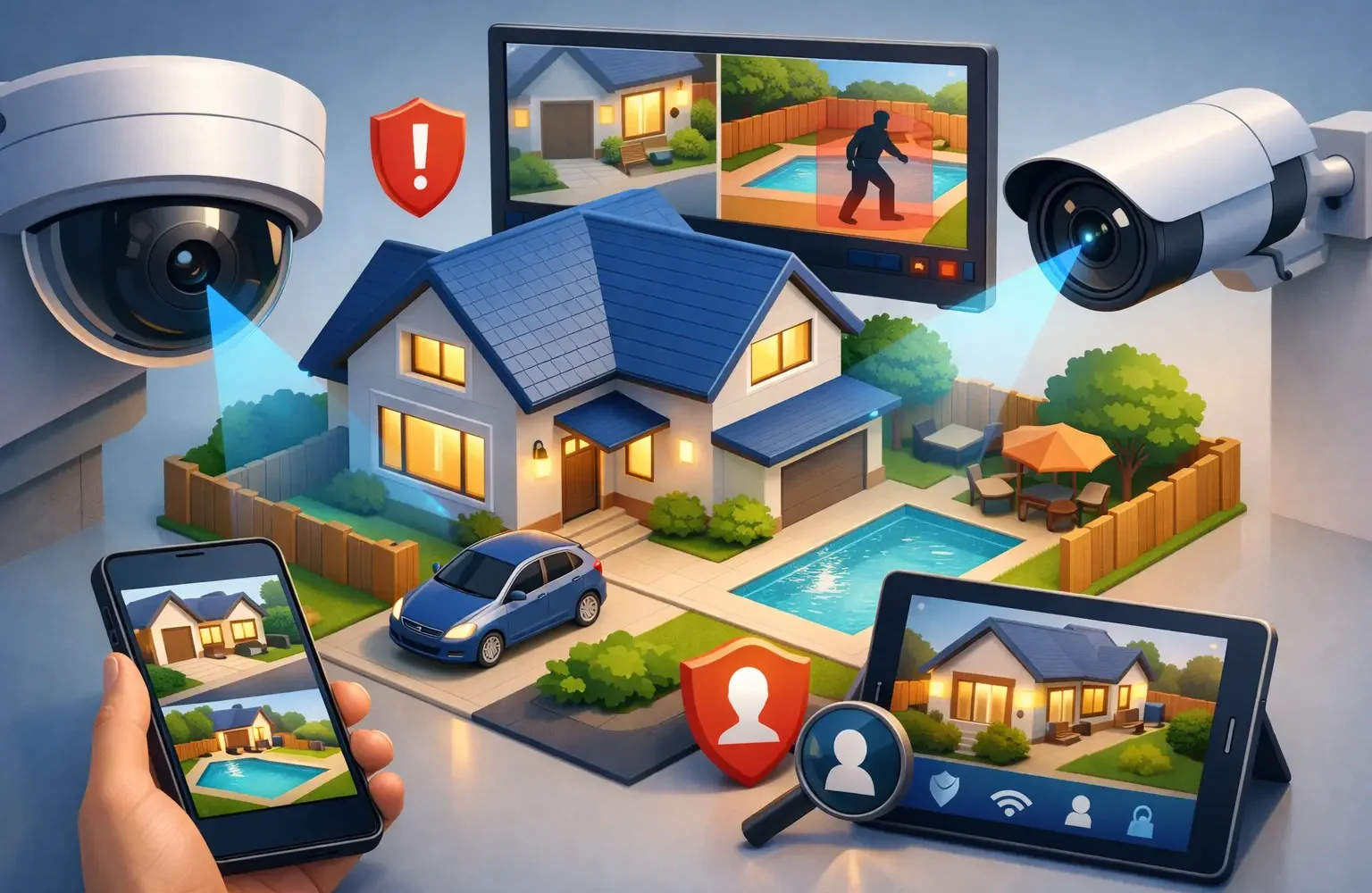
A neighbour spots someone trying car doors at 2am. The next morning, one house has clear footage, a time stamp, and a direction of travel. The others have a bad feeling and a guess. That is usually where the question starts: is CCTV worth it for home security, or is it just another gadget that promises more than it delivers?
The honest answer is that CCTV can be very worthwhile, but not for every property and not in every setup. Cameras are useful when they solve a real problem, cover the right areas, and work alongside good physical security. They are far less useful when they are treated as a substitute for decent locks, solid doors, proper lighting, and sensible habits.
Is CCTV worth it for home security in real terms?
For many households, yes. CCTV gives you two things that are hard to get any other way: visibility and evidence. You can see what happened, when it happened, and in many cases who was involved. That matters after a doorstep theft, repeated nuisance, attempted break-in, or dispute over damage.
It can also act as a deterrent. Not every opportunist wants to walk up to a clearly covered entrance, especially if there is a visible camera over the front door or driveway. A camera does not make a property untouchable, but it can make it less appealing than the one next door with darker access points and no obvious recording.
That said, CCTV does not stop someone forcing a weak door, climbing a rear fence, or reaching through a letterbox if the physical weak points are still there. A camera may capture the event perfectly and still not prevent the loss. That is why the value of CCTV depends on what sits around it.
What CCTV is actually good at
The strongest case for CCTV is not that it creates a fortress. It is that it improves awareness before, during, and after an incident.
If you are away from home, cameras can tell you whether a delivery arrived, whether someone is on the property, or whether a gate has been left open. If you have had repeat issues such as door-knockers, trespass, bin area dumping, or attempted entry, it gives you a record instead of relying on memory.
For landlords, holiday-let hosts, and HMO operators, CCTV can also help with entrance monitoring and external common areas where used lawfully and sensibly. It can support safer management of the property, but it needs careful positioning and clear purpose. Indoors, privacy concerns rise quickly, so the benefit has to be weighed properly.
CCTV is especially useful on front approaches, side access routes, rear doors, garages, and driveways. These are the points where people usually appear before a problem becomes a problem.
Where CCTV falls short
This is the part some installers skip. Cameras have limits, and if you ignore them, you end up disappointed.
Poor placement is common. A camera mounted too high may show the top of a hood instead of a face. A camera aimed into glare or darkness may record movement but little detail. Cheap systems often look fine in daylight and struggle badly at night, which is exactly when you may need them most.
Then there is overconfidence. Some people fit a camera and leave an old euro cylinder on the back door, a loose uPVC frame, or a door that no longer closes properly because it needs realignment. In practice, a criminal will usually choose the easiest route. If the physical security is weak, a camera becomes a witness rather than a barrier.
There is also the matter of maintenance. Lenses get dirty. Wi-Fi drops out. Apps stop notifying. Batteries run down on some models. If nobody checks the system, the camera that made you feel safer may not be recording when it matters.
CCTV works best with proper physical security
If you want a straight answer from a security point of view, CCTV is most worth it when it is part of a wider setup.
Start with the basics. Good locks, correctly fitted. Doors that align properly and latch cleanly. Windows that close and secure as they should. Lighting around key access points. A video doorbell or camera covering the front entrance. Rear access secured, especially if it is hidden from the road.
This is where practical advice matters more than sales talk. On some homes, upgrading the lock standard and fixing a sticking composite or uPVC door will do more for day-to-day security than adding three extra cameras. On others, particularly detached houses, corner plots, properties with side paths, or homes that back onto public access, CCTV adds real value because it covers space that cannot easily be seen from indoors.
Is CCTV worth it for home security if you are on a budget?
Often, yes, but only if you buy for purpose rather than for features you will never use.
A modest setup covering the front door and one key external approach can be enough for many homes. You do not need to turn your house into a control room. One or two well-placed cameras with decent night performance are usually more useful than a larger bargain system with poor image quality.
If money is tight, it helps to think in order of priority. First secure the main entry points. Then improve visibility. Then consider extra coverage. Spending on CCTV before sorting a vulnerable door or failed lock is usually the wrong way round.
There is also value in professional fitting. Not because every home needs a complex system, but because proper positioning makes a major difference. The right angle, height, and field of view can decide whether footage is genuinely useful or not.
Who gets the most value from home CCTV?
Detached and semi-detached homeowners often benefit because they have more external access points to monitor. People who travel regularly or leave properties empty between stays can also get strong value from remote viewing and alerts.
Landlords and short-let hosts may find CCTV worthwhile for lawful external monitoring of entrances and approaches, especially where there are repeated issues with access, antisocial behaviour, or attempted unauthorised entry. The key is to keep it proportionate, respect privacy, and understand where cameras should and should not be placed.
Tenants may benefit too, although permissions and practical limits can apply depending on the building and tenancy. In some flats, a video doorbell or a single door-facing camera may be the only realistic option.
For low-risk homes in quiet streets with strong locks, good natural visibility, and little history of problems, CCTV may be less urgent. It can still offer reassurance, but the return is more about peace of mind than a big security improvement.
Common reasons people regret buying CCTV
Most regret comes from choosing the wrong system, not from CCTV itself.
Some expect perfect identification from a budget camera pointed across a dark garden. Others assume cloud storage, app access, and motion alerts will all work flawlessly without checking signal strength or subscription costs. A few discover too late that tree movement, headlights, and passing cats trigger constant notifications, so they stop paying attention.
There is also the issue of false reassurance. If a camera is visible but the gate is broken, the shed is flimsy, or the lock is below standard, the setup may look stronger than it is. A good installer or security professional should be honest about that.
So, is CCTV worth it for home security?
If your goal is to deter opportunists, improve awareness, and have evidence when something happens, CCTV is often worth it. If your goal is to make up for weak locks, failing doors, or poor access control, it is not enough on its own.
The better question is not just whether CCTV is worth it. It is whether CCTV is the next right step for your property. Sometimes the answer is yes, particularly if key approaches are unobserved or you have had repeated concerns. Sometimes the smarter move is to fix the basics first and add cameras after.
A sensible security setup should feel practical, not flashy. It should reduce worry rather than create another system to manage. For many homes in central Scotland, that means a few well-chosen cameras, fitted in the right places, backed up by solid physical security and honest advice. If you want a home to be harder to target and easier to protect, that combination usually beats gadgets on their own every time.
Scotia Locksmiths are trusted, local, mobile locksmiths serving the following areas:
Perthshire & Kinross: Perth, Crieff, Blairgowrie, Kinross, Pitlochry,
Stirlingshire: Stirling, Dunblane, Callander, Killin, Lochearnhead
Dundee & Angus: Dundee, Broughty Ferry, Monifieth, Carnoustie
Fife: Dunfermline, Kirkcaldy, Glenrothes, St Andrews, Cupar, Leven, Rosyth
West Lothian and Falkirk: Falkirk, Grangemouth, Livingstone, Bathgate
Lanarkshire: Cumbernauld, Airdrie, Bellshill, Motherwell, Hamilton, Cambuslang
Clackmannanshire: Alloa, Tillicoultry, Tullibody, Alva, Dollar.