
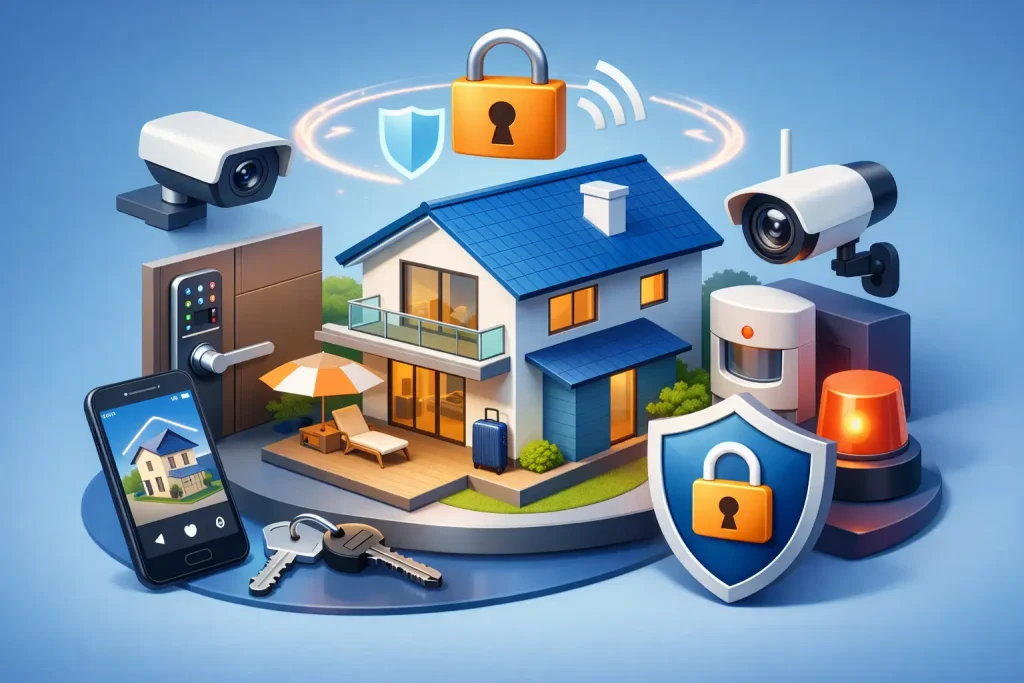
A guest arriving after a long journey should be able to get in easily, feel safe straight away and lock up confidently at night. That sounds simple, but it relies on good preparation behind the scenes. This guide to short let property security explains how hosts and landlords can protect the property, their guests and their income without making access difficult or creating unnecessary cost.
Short-let security is not just about fitting a stronger lock after something goes wrong. It is about controlling who can enter, spotting faults before a guest does and having a clear plan when keys are lost, doors will not lock or a property is left vulnerable between bookings.
Start with the doors guests use most
The main entrance is the first priority. A secure door needs more than a decent-looking handle. The lock, cylinder, keeps, hinges and door alignment all need to work together. A high-quality lock can still be ineffective if the door is loose in its frame, the latch does not fully engage or the cylinder protrudes where it can be attacked.
For timber doors, check that the night latch or mortice lock operates smoothly and that the strike plate is firmly fixed. For uPVC and composite doors, lift the handle fully before locking and test whether the multipoint mechanism engages without force. Guests often do not report a stiff handle until it fails completely, so this is worth checking at every changeover.
If a key turns but the door will not lock, or the handle needs lifting unusually hard, arrange a repair before the next arrival. Continuing to use a misaligned door can damage the gearbox or locking mechanism and turn a straightforward adjustment into a more costly replacement.
Use suitable locks, not just more locks
The right lock depends on the door, the property layout and how it is used. External doors should have locks appropriate to the door type and insurance requirements. It is also sensible to use thumbturn cylinders with care. They can offer a quick exit without a key, which may suit some properties, but they must not create an avoidable risk where a letterbox or nearby glazing gives someone access to the internal turn.
A locksmith can assess the full door setup rather than simply changing one part. Honest advice matters here. Not every property needs the most expensive product, but every external door should close, lock and resist basic forced entry reliably.
Control keys and guest access carefully
Lost keys are one of the most common short-let security problems. They are also difficult to judge. A guest may lose a key far from the property, while a cleaner may accidentally take one home. If that key can be linked to the address, the safest response may be to change or rekey the lock rather than assume it will turn up.
Avoid giving out your only set of keys. Keep a labelled management set in a secure place away from the property, and record who has access: co-hosts, cleaners, maintenance contractors and family members. When someone no longer works with you, recover their keys promptly or change the cylinder if there is any doubt.
Key safes can be useful for late arrivals and remote management, but they need careful use. Fit a security-rated model to sound masonry where possible, keep it away from obvious sightlines and change the code regularly. Do not use a code based on the property number, postcode or a simple repeating pattern. Most importantly, do not leave the same code in place for months just because bookings are running smoothly.
Smart locks and keypad locks can reduce the need for physical key handovers. They work well for some hosts, particularly where access codes can be changed between stays. However, they are not automatically the best answer. Consider battery maintenance, emergency access if electronics fail, the reliability of the door mechanism and whether guests will understand the locking process. A good physical lock remains essential.
Secure windows, patios and secondary entrances
Burglars do not always use the front door. Ground-floor windows, French doors, patio doors, basement access and side entrances deserve the same attention, especially in properties that are empty for part of the week.
Check that window locks work and that the keys are available where needed, but not left permanently in the lock on an accessible ground-floor window. Patio door tracks should be clean and doors should close fully. If a sliding or hinged door can be lifted, forced or left partly open because of worn rollers, it needs attention.
Do not overlook communal areas in flats. A secure private flat door is valuable, but a broken common-entry door gives unauthorised people easy access to the building. Report defects quickly to the factor, landlord or managing agent, and make guests aware that communal doors should never be wedged open.
Build security into every changeover
A short let changes hands more often than a normal tenancy. That means small faults can go unnoticed until the property is unoccupied or a guest is locked out. A short, repeatable check after each departure is one of the best security measures a host can put in place.
Your cleaner or property manager should confirm that external doors lock, windows are shut and secured, spare keys are present, and no keys have been left in doors or visible near windows. They should also look for signs of damage around locks, handles, frames and letterboxes. A door that has been forced, even if it still shuts, should be checked before another guest stays there.
It also helps to test outside lighting. A poorly lit path, entrance or rear garden makes guests feel less secure and can make suspicious activity harder to notice. Motion-sensor lighting is often a sensible option, provided it is positioned to light access routes without shining directly into neighbours’ homes.
Be clear about privacy and guest safety
Security equipment must protect guests without making them feel watched. External CCTV or a video doorbell can be useful around entrances, driveways and gates, particularly where there are repeated concerns about unauthorised access. It should never be used in private internal spaces.
Tell guests clearly about any external cameras before booking and in the property information. Position devices so they cover the relevant entrance rather than a neighbour’s private area. Security footage should be managed responsibly, with access limited to the people who genuinely need it.
Alarm systems can offer reassurance, but only if they are simple enough for guests to use. A complicated alarm that regularly triggers false activations can create stress for guests and complaints from neighbours. If you use one, provide plain instructions, an emergency contact number and a process for resetting it after an accidental activation.
Plan for lockouts and urgent repairs
Even well-managed properties have occasional problems. A guest may leave keys inside, snap a key in the lock, report a failed mechanism or find that a previous visitor has not returned a key. The important thing is to respond quickly without compromising the property.
Keep an emergency procedure in your guest information. It should explain who to contact first, what details to provide and what guests should not do. They should not force a door, attempt to remove a cylinder or climb through a window. These actions can cause injury and turn a non-destructive entry job into a repair.
Choose a local locksmith before an emergency happens. Ask whether there is a call-out fee, whether pricing is confirmed before travel, whether the locksmith is insured and DBS-checked, and whether non-destructive entry will be attempted where possible. These details matter when you are arranging help from a distance and a guest is waiting outside.
For short-let hosts across central Scotland, Scotia Locksmiths can provide planned security checks as well as help with lockouts, damaged locks, door realignment and post-break-in securing. Clear upfront pricing and practical recommendations make it easier to make a decision without pressure.
Check security alongside your wider obligations
Short-let requirements can vary by local authority and property type, while fire safety, licensing, insurance and HMO duties may add further responsibilities. Physical security does not replace those requirements, but it supports them. Guests need doors and escape routes that operate properly, locks that do not trap anyone inside and a property that can be secured when vacant.
Keep records of repairs, lock changes and safety checks. This is useful for property management and gives you a clear history if an insurer, licensing officer or guest asks what has been done. It also helps identify recurring issues, such as a rear door that regularly drops out of alignment or a key safe code being shared too widely.
Good short-let security should feel almost invisible to guests. They should not need to struggle with a handle, worry about a key safe or wonder whether the door has locked behind them. A few regular checks and the right advice when something changes can keep the stay safe, straightforward and welcoming.