
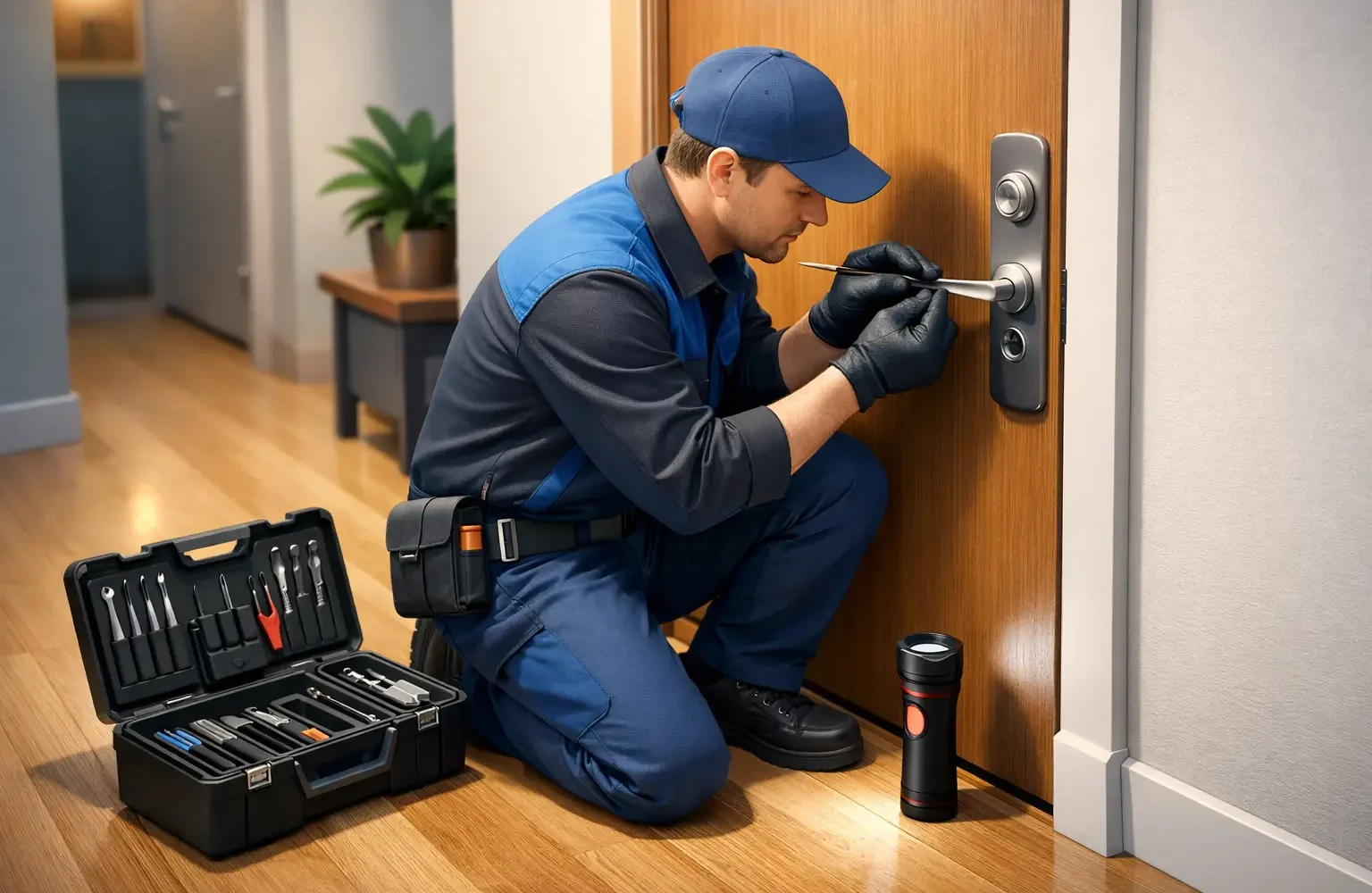
A locked door always seems to happen at the worst moment – when the bins need taking out, when a guest has arrived, or when you are already late. If you are wondering how to open a locked door without damage, the first thing to know is that it depends on why the door is locked in the first place. A simple internal latch is very different from a deadlocked front door, a dropped uPVC door, or a failed lock mechanism.
That matters because the wrong approach can turn a straightforward entry job into a damaged lock, a marked door frame, or a full replacement. In many cases, the safest route is not force but a quick check of what type of lock and door you are dealing with.
How to open a locked door without damage: start with the cause
Before touching the handle again, stop and look at the symptoms. Is the key missing, snapped or spinning? Has the handle gone floppy? Is the door shut but not fully deadlocked? Does the door feel tight against the frame as if it has dropped or swollen?
Those details tell you whether this is a key problem, a lock fault, or a door alignment issue. People often assume the lock is the problem when the real issue is pressure on the mechanism. That is especially common with uPVC and composite doors, where misalignment can make a working lock feel jammed.
If someone is inside and safe, ask them to test the handle gently while you observe the latch. If the door has a privacy lock, such as a bathroom or bedroom door, there may be a simple emergency release on the outside. These are designed to be opened without damage and usually need only a flat tool or coin.
Doors you may be able to open safely yourself
Not every locked door needs a locksmith. Some can be opened with no damage if the lock is basic and the fault is obvious.
Internal privacy locks
Bathroom and bedroom privacy locks are often the simplest. Many have a small slot or pinhole on the outside for emergency access. If that is what you have, a coin, flat screwdriver or the proper release tool may open it in seconds. Use light pressure only. If it does not release, stop rather than twisting hard and damaging the spindle or trim.
A latch-only door that has not been deadlocked
If a door is only held shut by a sprung latch and not by a key-thrown deadbolt, there are sometimes non-destructive ways to release it. Whether that works depends on the door gap, the type of latch, and whether the frame allows access. It is not a guaranteed do-it-yourself job, and trying random tools often leaves marks on the frame or bends the latch.
A stiff door caused by alignment
If the key turns partly but the door will not open, pressure may be the issue rather than the lock itself. On some doors, especially uPVC, lifting or pulling the handle slightly while easing the door towards or away from the frame can take pressure off the mechanism. The key point is gentle movement. If the lock still resists, forcing the key can snap it.
When you should stop trying
There is a point where trying to save money becomes the expensive option. A locked external door, a euro cylinder that is not responding properly, a multipoint lock that feels jammed, or a key that is bending under pressure are all good reasons to stop.
You should also stop if the door secures a business unit, a tenanted property, a short-let, or any building where accountability matters. Damage to the lock, frame or glazing can quickly cost more than a proper entry service. It can also leave the property insecure, which is the last thing you need late at night or before guests arrive.
If there is a child inside, a medical issue, a risk of fire, or anything urgent involving safety, treat it as an emergency and call the relevant emergency service if needed before thinking about the lock.
Common mistakes that cause damage
Most damage happens not because the lock was impossible to open, but because the method did not match the problem.
The first mistake is using force on the key. If the cylinder or internal mechanism is failing, extra pressure can shear the key or damage the cam. The second is using improvised tools against the frame. Bank cards, kitchen knives and metal strips can mark the door, slip unexpectedly, or make a simple latch job much worse.
Another common problem is attacking the wrong part of the door. If the issue is alignment, replacing the cylinder will not fix it. If the handle return spring has failed, shoulder-barging the door will not help either. A calm diagnosis usually saves both time and money.
Why front doors are different
A front door is usually built to resist casual entry. That is the whole point. Timber doors with mortice locks, composite doors with multipoint systems, and uPVC doors with gearbox faults each need a different approach. Some can be opened non-destructively by a trained locksmith. Some cannot, particularly if the internal mechanism has failed in a specific way.
That is why any honest advice on how to open a locked door without damage has to include a clear trade-off. Non-destructive entry is often possible, but never something a trustworthy locksmith should promise before seeing the lock type and the fault. The right approach is to aim for the least invasive method first, then explain the options if that is not possible.
For customers, that matters just as much as the technical skill. Clear pricing, a proper explanation, and no pressure are what make a stressful lockout easier to deal with.
If you call a locksmith, what should happen
A good locksmith should begin by asking sensible questions. What kind of door is it? Is it domestic or commercial? Is the key lost, inside, snapped, or turning? Has the handle failed? Can anyone access the property another way? Those questions are not just admin. They help narrow down the likely fault before travel.
Once on site, the process should be straightforward. Identity and authority to enter should be checked where appropriate. The locksmith should assess the door and explain the likely method before starting work. If non-destructive entry is possible, that should be attempted first. If not, you should know why and what the cost implication is before work continues.
That level of clarity is especially important for landlords, letting agents and small business owners, because they are often making decisions for someone else’s property. One locksmith from start to finish, insured attendance, and upfront pricing remove a lot of uncertainty.
For landlords, hosts and business owners
Lockouts in managed properties are rarely just about getting a door open. There may be guest arrival times, staff access, tenancy obligations or insurance concerns in the background. In those situations, the cheapest-looking option is not always the best one.
If forced entry damages a communal door, a shopfront, or a tenant’s lockset, the bill can multiply quickly. It is usually better to choose someone who can assess whether the problem is the cylinder, mechanism, handle set or alignment, and deal with it properly on the first visit.
This is where local, accountable service matters. A business like Scotia Locksmiths is built around non-destructive entry where possible, clear pricing before travel, and no call-out fee, which suits customers who need certainty rather than hard sales language.
What you can do right now before calling anyone
Check whether another entrance is safely available, confirm the exact lock type if you can, and look for signs of misalignment or a privacy release. If you have a spare key holder nearby, call them before attempting anything more. If the key is in the lock on the other side, mention that straight away, as it can affect the method.
Take a photo of the lock and handle if you are speaking to a locksmith by phone. A quick image often helps identify whether it is a cylinder issue, a mortice lock, or a multipoint door problem.
Then be honest about what has already been tried. If the key has been forced, if the handle feels loose, or if you have already used a tool on the latch, say so. It gives a clearer picture and avoids wasted time.
A locked door is stressful, but most situations have a clean solution when handled calmly. The best next step is the one that gets you back in without turning a lockout into a repair job.