
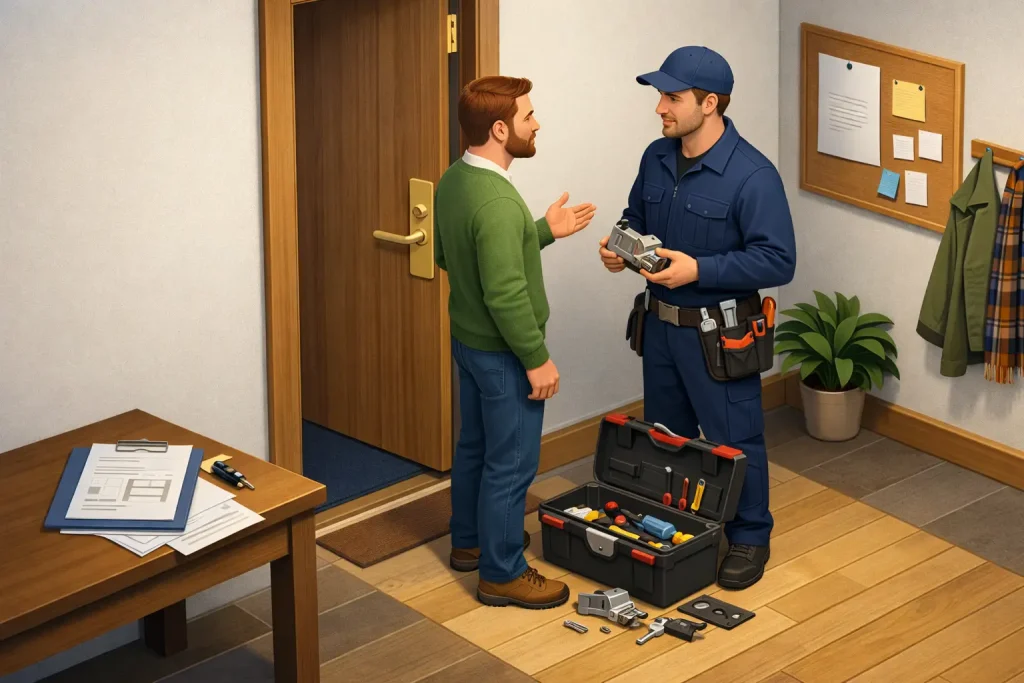
If you have fallen out with a landlord, split up with a partner, or lost track of who still has a key, tenant lock change rights stop feeling like a technical question very quickly. It becomes a safety question. The trouble is that many tenants assume either they can change the lock whenever they like, or that they are never allowed to touch it. In practice, the answer usually sits somewhere in the middle.
For tenants in Scotland, the key issue is not just whether a lock can be changed, but what your tenancy agreement says, why you want to do it, and whether the change affects the landlord’s legal rights or the condition of the property. If you get it wrong, you can create a dispute that costs more than the lock itself. If you get it right, you can protect yourself without making the tenancy harder than it needs to be.
What tenant lock change rights usually mean
A tenant does not own the door hardware just because they live in the property, but they do have a right to quiet enjoyment of the home. That means the landlord cannot simply come and go as they please. At the same time, the property still belongs to the landlord, and most tenancies restrict alterations without permission.
That is why lock changes sit in a grey area. Replacing a lock cylinder on a standard euro-profile door is often quick, reversible and does not damage the door. Even so, it can still count as an unauthorised alteration if the tenancy agreement says written permission is required before making changes to fixtures or fittings.
The practical point is this: a tenant may be able to change a lock in some situations, but that does not automatically mean they are entitled to do so without notice, without consent, or without consequences.
Tenant lock change rights and your tenancy agreement
The first place to look is your tenancy agreement. Some agreements clearly ban any lock replacement without the landlord’s consent. Others say the tenant must not alter security fittings, but may request changes where there is a genuine security concern. A few are silent on the issue altogether.
If the agreement is silent, that does not give unlimited freedom. It simply means the position is less explicit, so general tenancy rules and common sense matter more. If there has been a break-in, a domestic abuse concern, stalking, harassment, or a lost key with a known address attached, the case for changing the lock is much stronger than if the issue is simply convenience.
If the agreement bans changes outright, you still should not assume the matter ends there. A blanket clause may not look reasonable if the tenant has a genuine safety risk and the landlord is refusing to act. But that is where legal advice may be sensible, because locksmith advice and legal advice are not the same thing.
When a tenant may have a strong reason to change the lock
There are situations where changing the lock is easier to justify. One is where keys have been lost or stolen and there is a real risk they could be used. Another is where a former partner, ex-housemate or contractor may still have access. Another is after attempted forced entry, even if the lock still works.
In those cases, waiting days for emails to go back and forth is not always realistic. Security problems often need same-day action. If you need the lock changed urgently, it is still wise to tell the landlord or letting agent as soon as possible, explain why, and keep a written record. A calm message sent before or immediately after the work is done can make a big difference if questions come up later.
There is a trade-off here. Acting fast may protect your safety, but acting without communication may create a tenancy dispute. The safest route is usually urgent action paired with clear notice.
When changing a lock can cause problems
The biggest issue is denying lawful access. A landlord in Scotland cannot let themselves in whenever they fancy, but they are entitled to reasonable access for inspections, repairs, safety checks and viewings in line with the tenancy terms and proper notice. If a tenant changes the lock and refuses to provide access at all, the problem is no longer about security. It becomes potential breach of tenancy.
There is also the matter of damage. If a lock is swapped badly, if the wrong hardware is fitted, or if a uPVC or composite door is forced out of alignment during the job, the tenant may be held responsible for repair costs. This is common where someone tries a DIY fix, buys the wrong cylinder length, or overtightens fixings and affects the mechanism.
Then there is the question of reinstatement. Even if a tenant changes a lock for a fair reason, they may be expected to put the original lock back at the end of the tenancy unless the landlord agrees otherwise.
Do you have to give the landlord a key?
This is one of the most common points of confusion. Some landlords assume they must always hold a working key. Some tenants assume they never have to hand one over. The reality depends on the tenancy terms and the circumstances.
In many cases, it is sensible to provide a key or at least confirm that access will be arranged promptly when proper notice is given. That helps avoid arguments about repairs, safety inspections and emergencies. But there are situations where handing over a key may feel unsafe, especially if there has already been boundary-crossing behaviour or unauthorised entry.
If trust has broken down, the better approach may be to get the position clarified in writing rather than turn a key dispute into a bigger conflict. A tenant should not use a lock change to block all access forever, and a landlord should not use key possession as an excuse to bypass notice rules.
The difference between emergency changes and planned changes
Not every lock change carries the same level of risk. An emergency replacement after a key theft or security incident is easier to defend than a planned upgrade done without a word to anyone. Timing matters.
If the situation is planned rather than urgent, it is usually best to ask first, explain the reason, and propose a simple solution. That might mean replacing only the cylinder, using a like-for-like part, and giving the landlord a copy of the new key if appropriate. Where the concern is temporary, it may even make sense to ask the landlord to arrange the locksmith directly.
If it is an emergency, speed matters more. Even then, choose someone who aims for non-destructive work where possible and can fit the correct hardware without damaging the door or frame. A rushed job done badly can leave you less secure than before.
Shared properties, HMOs and holiday lets
Tenant lock change rights get more complicated in shared accommodation. In an HMO or flat share, changing the main entrance lock without agreement can affect other tenants, fire safety arrangements and management duties. Changing a bedroom door lock may also breach the tenancy if the property is managed as a shared let with specific access rules.
For short lets and holiday accommodation, guests generally have far fewer rights to alter locks at all. These arrangements are different from standard residential tenancies and are usually much stricter on changes to hardware or access systems.
If you are in a shared or managed property, assume there are extra layers to think about before any lock is changed.
The safest way to handle a lock dispute
The most sensible approach is usually the least dramatic one. Read the tenancy agreement. Write down the reason for the change. Contact the landlord or agent in plain language. If it is urgent, say so. If you have already changed the lock, explain what was changed, confirm whether any damage was caused, and say how access will be handled going forward.
Keep copies of messages, invoices and any photos of the original condition. If the landlord agrees, ask for that agreement in writing. If they refuse and the issue involves safety, harassment or unlawful entry, get proper housing or legal advice rather than relying on hearsay.
From a locksmith’s point of view, the best jobs are the ones done cleanly, with the right parts, and with no unnecessary damage. For tenants, that matters because a tidy, reversible lock change is much easier to justify than a bodged one. For landlords, it matters because the property remains secure and serviceable.
A local firm such as Scotia Locksmiths can deal with the practical side, but the legal position always depends on the tenancy and the facts. That is why honest advice matters more than hard selling.
If you are worried enough to ask whether you can change the lock, there is usually a reason behind it worth taking seriously. Handle it calmly, keep it in writing, and aim for a solution that protects your safety without creating a bigger problem than the one you started with.